
The History
This all began in Colorado Springs, where my introduction to fishing came early—standing alongside my father and brother on small trout streams in the Rockies. Those days shaped more than just a pastime; they defined a way of seeing the world. The sound of current moving over rock, the sudden rise of a trout, and the quiet patience required to cast a line became something I carried with me long after childhood.
What began as a simple love for fishing gradually evolved into something deeper.
As I explored rivers across the West, fly fishing became more than the act of catching fish—it became a pursuit rooted in understanding. I began tying my own flies, learning how the smallest details—proportion, material, movement—can bring a pattern to life. Each river taught something new. Every hatch, every refusal, every success added another layer to that knowledge.
Over time, that same curiosity led me beyond the fly and into the rod itself.
For the past 15 years, I’ve been intentionally building toward this chapter. As retirement approached, we created the space to fully pursue this craft—establishing a workshop and second home on 11 acres, nestled at 9,600 feet in the Rockies. It’s an environment that reflects exactly what this work demands: quiet, focus, and connection to the water.
Our rhythm follows the seasons—winters spent in Phoenix developing bamboo rods, and spring through fall on Colorado’s Western Slope, where those rods are put to the test on the water they were built for.
Over the years, I’ve built rods from a range of materials—fiberglass, boron, and ultimately bamboo. Each step was part of the progression, but bamboo revealed something different. It brought the craft back to its roots.
Building bamboo fly rods with bamboo ferrules allows the rod to remain whole preserving the natural continuity of the cane from end to end. Without interruption from synthetic materials, the rod flexes more uniformly, delivering the smooth, responsive feel that only bamboo can provide. It is not just a design choice—it is a commitment to honoring the material and the tradition behind it.
Today, fly fishing represents a complete circle.
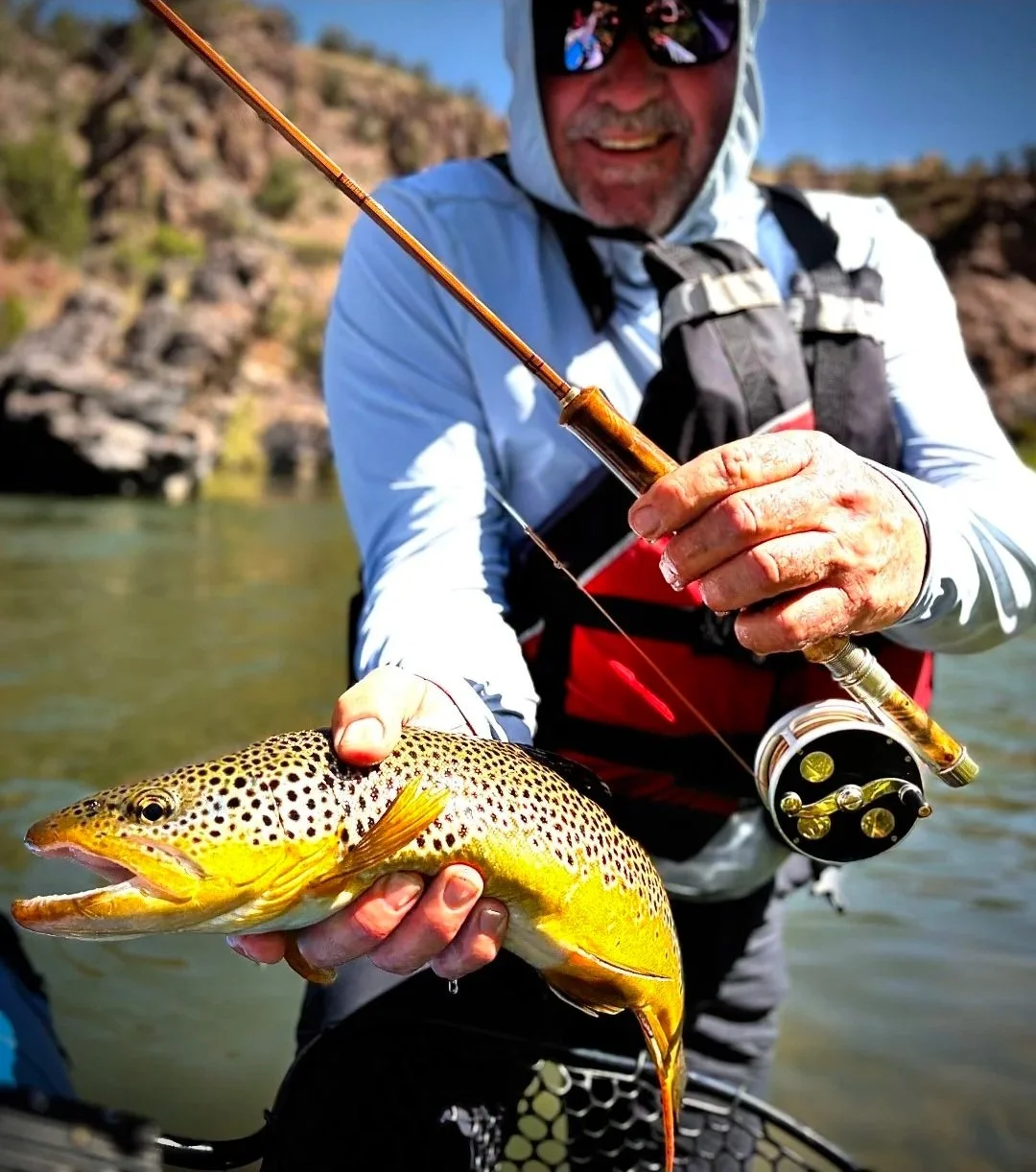
From tying flies to building rods, every part of the process is connected. There is something deeply meaningful about catching a fish on a fly you tied, with a rod you built by hand. It is a return to simplicity, to intention, and to the essence of why we fish in the first place.
That philosophy is the foundation of Lake Fork Rods.
Contact us
Interested in working together? Fill out some info and we will be in touch shortly. We can’t wait to hear from you!